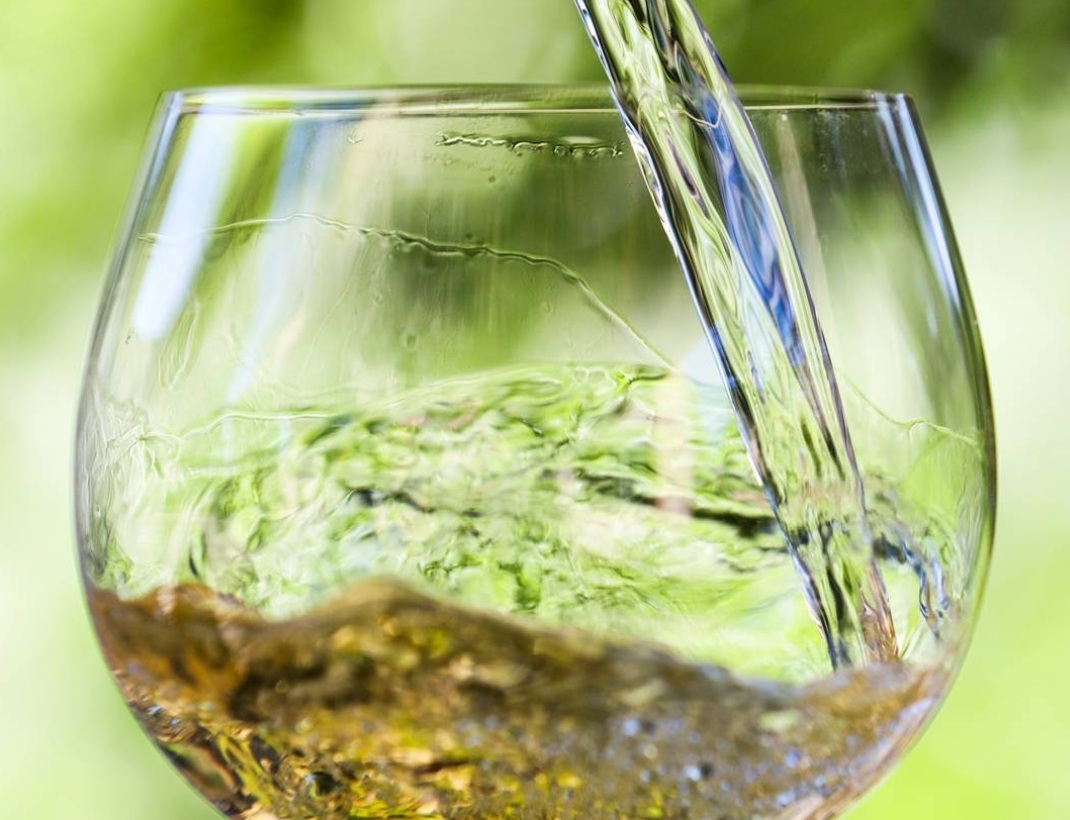
While in terms of land use we chose the most economical spot possible on which to build our winery, we still had to take out about two thirds of an acre of Cabernet Sauvignon vines. To make up for that, we determined to plant new vines as soon as possible in whatever area was left after the winery was complete.
Since the vines were to be new, we wanted to plant a new variety - one we were not already growing. We always assumed it would be a red variety, then somewhere along the line, the idea of planting a white variety took root as it were. Back in the late 1800s when grapevines were first planted in our neighborhood, they were almost exclusively white varieties, most seldom seen here now. So we thought we’d recreate a little neighborhood history and plant white grapes.
But which variety? Anyone who knows us knows we love white Burgundy, made from Chardonnay. We model Young Inglewood Chardonnays after the best examples of white Burgundy. Knowing that the Oak Knoll vineyard where we grow our Chardonnay is better suited climatically to producing that grape, we looked for a different white variety.
Something Different
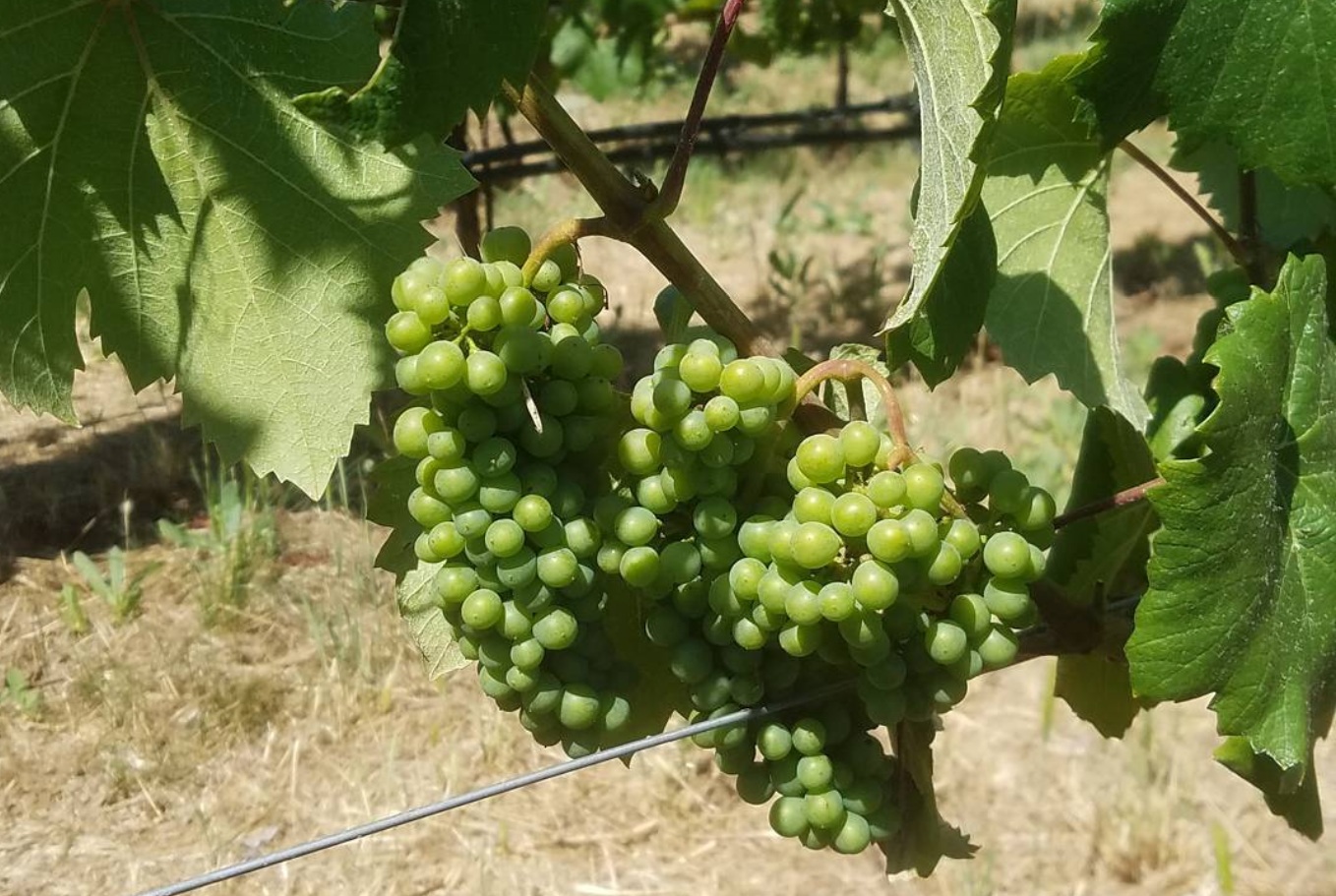
The primary white grape of Burgundy is Chardonnay. The Burgundians however grow another lesser known, but widely respected white wine variety: Aligoté. Moreover, the wines produced from it are delightful – crisp and delicious. Most of the major producers of white Burgundy produce their own version of Aligoté in addition to their Chardonnays. As a further historical note, Aligoté used to be widely planted in California but is now confined to less than a handful of producers. Able to pay our respects to the history of both Napa Valley and Burgundy, our choice was made: Aligoté. It would be fun and exciting to see the character of the grape we could grow in our corner of the Napa Valley.
How and when to plant
First, a little wine history. Grapevines grown for wine are an ancient species called Vitis vinifera, native to Europe. In the late 1800s, the thriving European wine industry which depended on it was devastated by a pesky louse called phylloxera that ate its way through vinifera roots and killed the vines, (causing the ominous epithet “vastatatrix” to be appended to the louse’s name). Due to the import of vinifera for the burgeoning American wine industry, the louse migrated to the United States, devastating vineyards here too. Fortunately, it was discovered that native American grapevines, while not suitable for producing wine, were resistant to phylloxera. It was further discovered that vinifera cuttings, grafted to the rootstocks of native American vines, would grow into vinifera grapevines. Since the 1800s therefore, it has been common practice for vineyards throughout the world to grow wine in this way.
How's this done?
The two most successful ways are by field budding and bench grafts. In the first, vinifera is grafted on to already planted rootstocks. In the second the grafting is done in the nursery and the plants are babied along a bit before they are planted in the vineyard. Our preference was to use bench grafts to give the vines a little maturity before we planted them.
Next hurdle – how to find the vines
Since Aligoté is rarely planted any more in the US it was a challenge to find a source, still more one we could rely on to provide us with healthy plants. Enter our vineyard manager Doug Hill, who had originally planted our vineyard. Doug located the Aligoté through Foundation Plant Services, a department of UC Davis that produces and distributes virus & disease-tested plants. Doug also contracted with a nursery to graft the vines onto our chosen rootstocks. While there weren’t quite enough plants to cover the area we had initially planned, we felt it was better to plant fewer vines than to fill the remaining area with rootstocks and wait another year before we could graft Aligoté vines on to them.
Preparing to Plant
Doug located the vines in March 2013 and we were able to plant them just before the 2013 harvest. In the intervening time there was much to do.
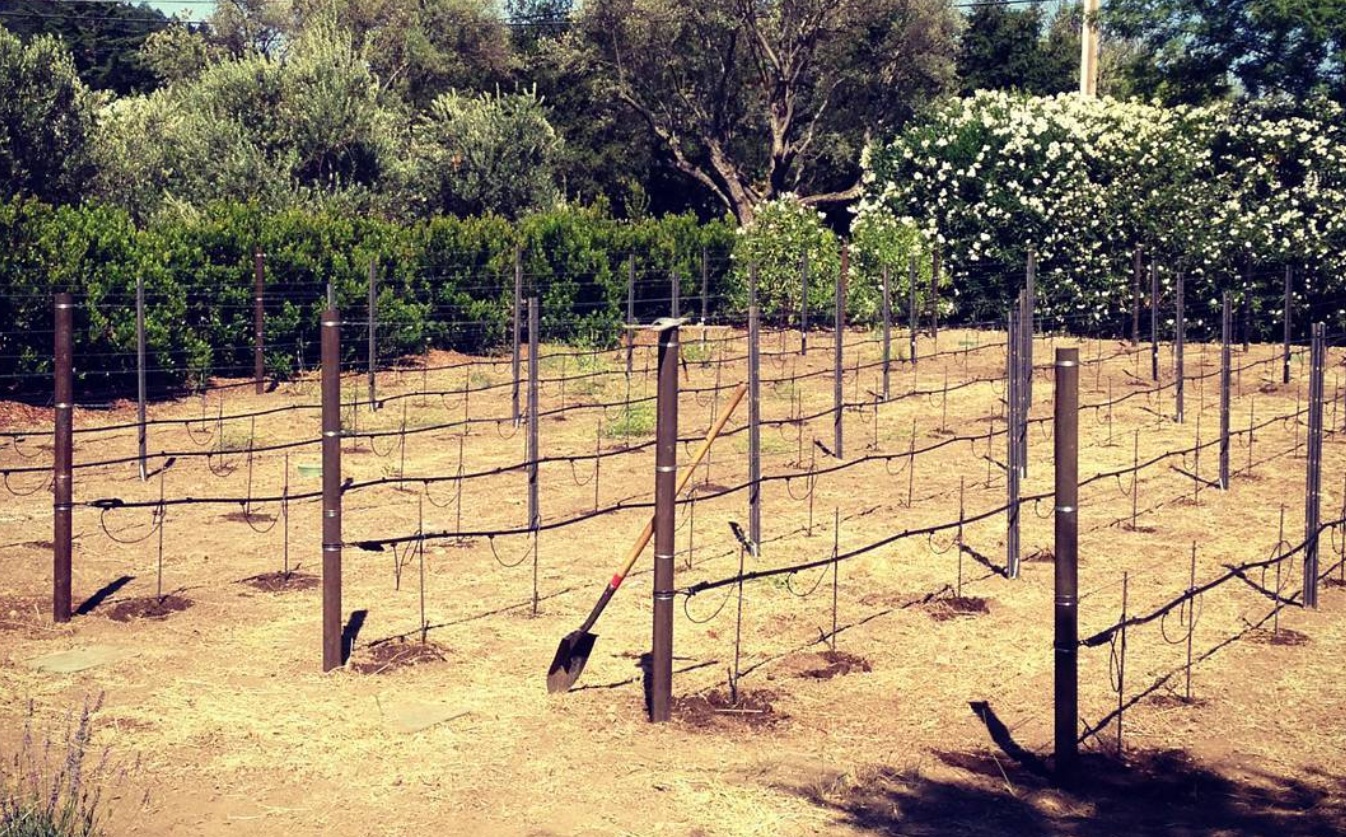
After preparing the soil for planting, the next task was to pick the spacing between the vines and install a trellising system – the system of poles and wires that support the vines as they grow. We decided to follow the Burgundian tradition, as well as the tradition in our existing vineyard and choose the Guyot trellising system, named for Jules Guyot, an early 19th century French agronomist, known for improvements in the cultivation of grapevines for fine wine. In the Guyot system, vines can be trained to grow either from a single “cordon”, or two cordons. Since Aligoté is a vigorous grower, we picked the double cordon or “double Guyot”, which forces the vine to divide its energy. We then installed the necessary poles and wires to form our vine rows.
Water
We needed a water supply to help the young vines thrive. We provided this through a system of pipes connected to our vineyard well. The pipes were buried in the ground, with above ground connections at the end of each row of grapes. From each above ground connection a hose was run along the trellis wire. At each vine position, a thin piece of hose was trained vertically downwards so that water could trickle into the root zone of each plant when the hoses were turned on. This system is known as drip irrigation. It is more water efficient and more effective than sprinkler systems because the water only gets to where it is needed – the roots. If the leaves get wet, they can be burned by the sun as they dry out. The vine loses an important source of food if that happens.
Sprinklers, however, are highly effective for protecting vines from winter frosts. The sprinkler water warms up the vines and stops them from freezing. A frozen vine is a dead vine! With this in mind, a sprinkler, looking exactly like the sprinklers you find in a home for fire protection, was added to the top of each vine pole.
Planted
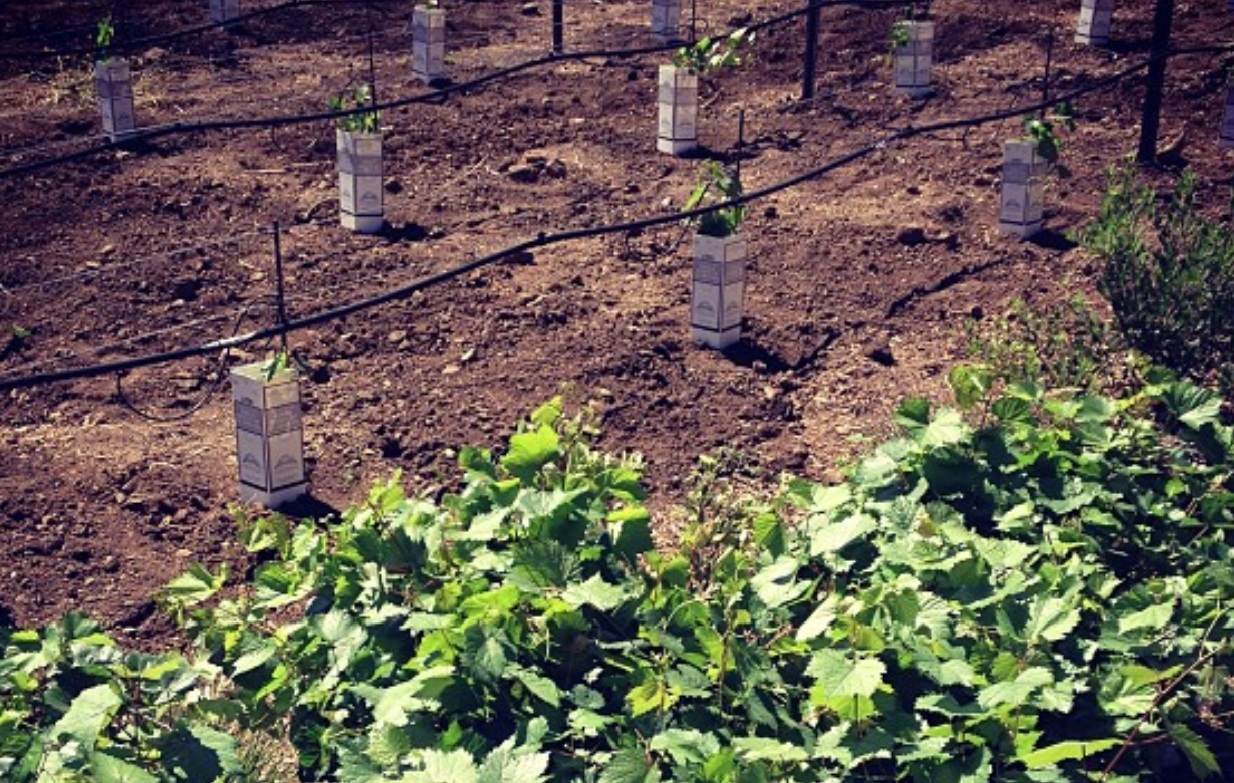
Once the 2013 harvest season was over, and the vines in dormancy, the Aligoté grafts were put in the ground at last with the expert advice of Steve Matthiasson our viticultural advisor. We pruned the plant shoots in March 2014, along with all our other estate vines. By the middle of April, we had enough growth to be able to select the strongest shoots destined to become the vine trunks and pinch off the others. By the end of May, we were able to select the “double Guyot”, the two shoots per vine chosen to become canes and then cordons, the “arms” of the vine, from which canes that eventually produce grapes grow.
What was Young Inglewood's first vintage of Aligoté?
Astonishingly, we made a tiny amount of Aligoté in 2015, when the vines were only in their third leaf! At harvest time our small team picked the ripe Aligoté grapes ourselves. There weren’t enough for us to use our mechanical press. Instead, we pressed the juice from the grapes by hand through a sieve. It took several hours but our labors resulted in 10 cases of wine – a pretty respectable amount under the circumstances!
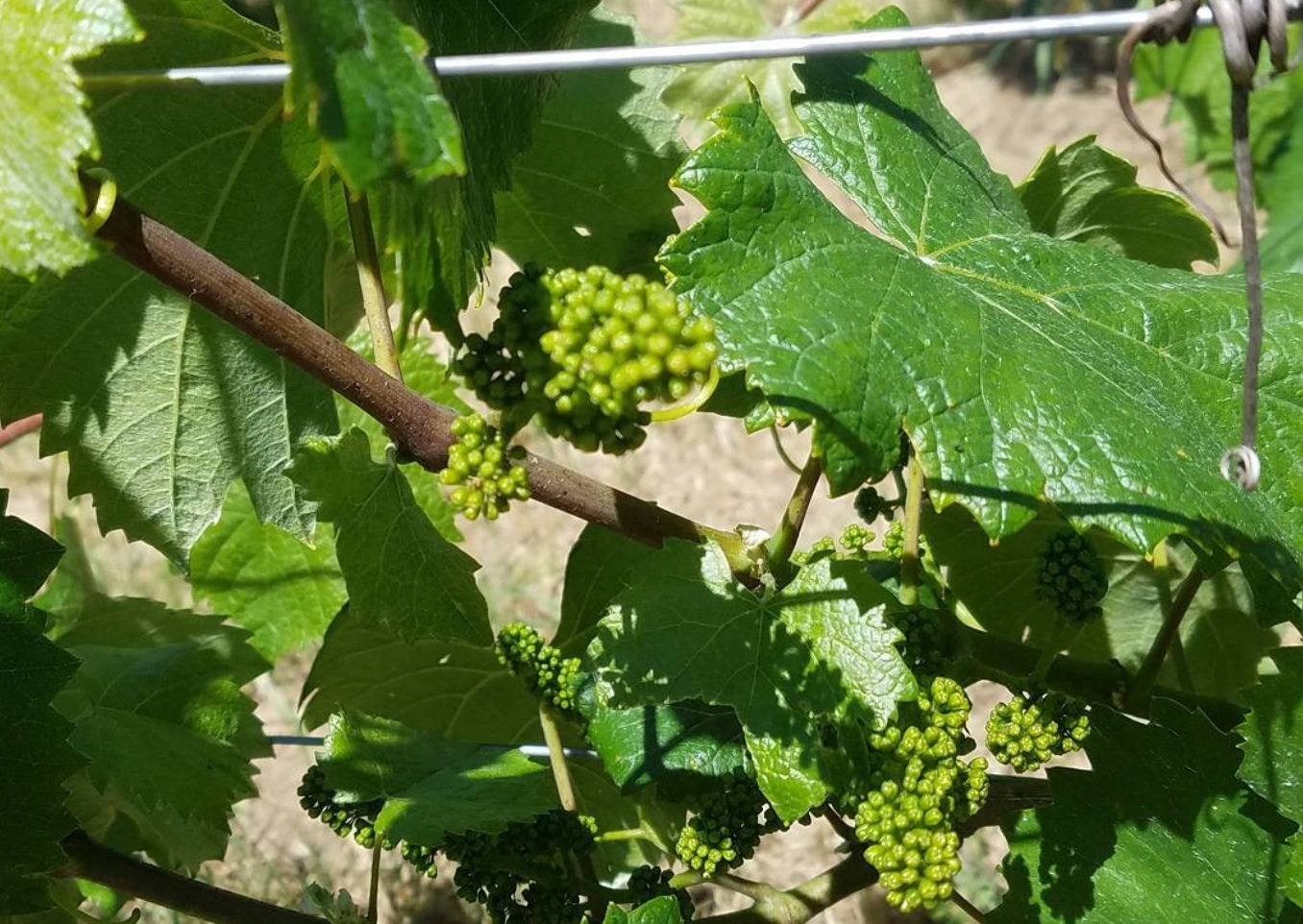
Young Inglewood Aligoté then and now
The juice from our first couple of vintages was 100% aged in stainless steel barrels. The finished wine had distinctly exotic tropical fruit flavors – pineapple, melon and mango. After those first few vintages, we felt the grapes were mature enough to be introduced to neutral French oak barrels. In the 2019 vintage, we had enough grapes to produce a side by side comparison between our stainless steel and oak aged Aligoté wines.
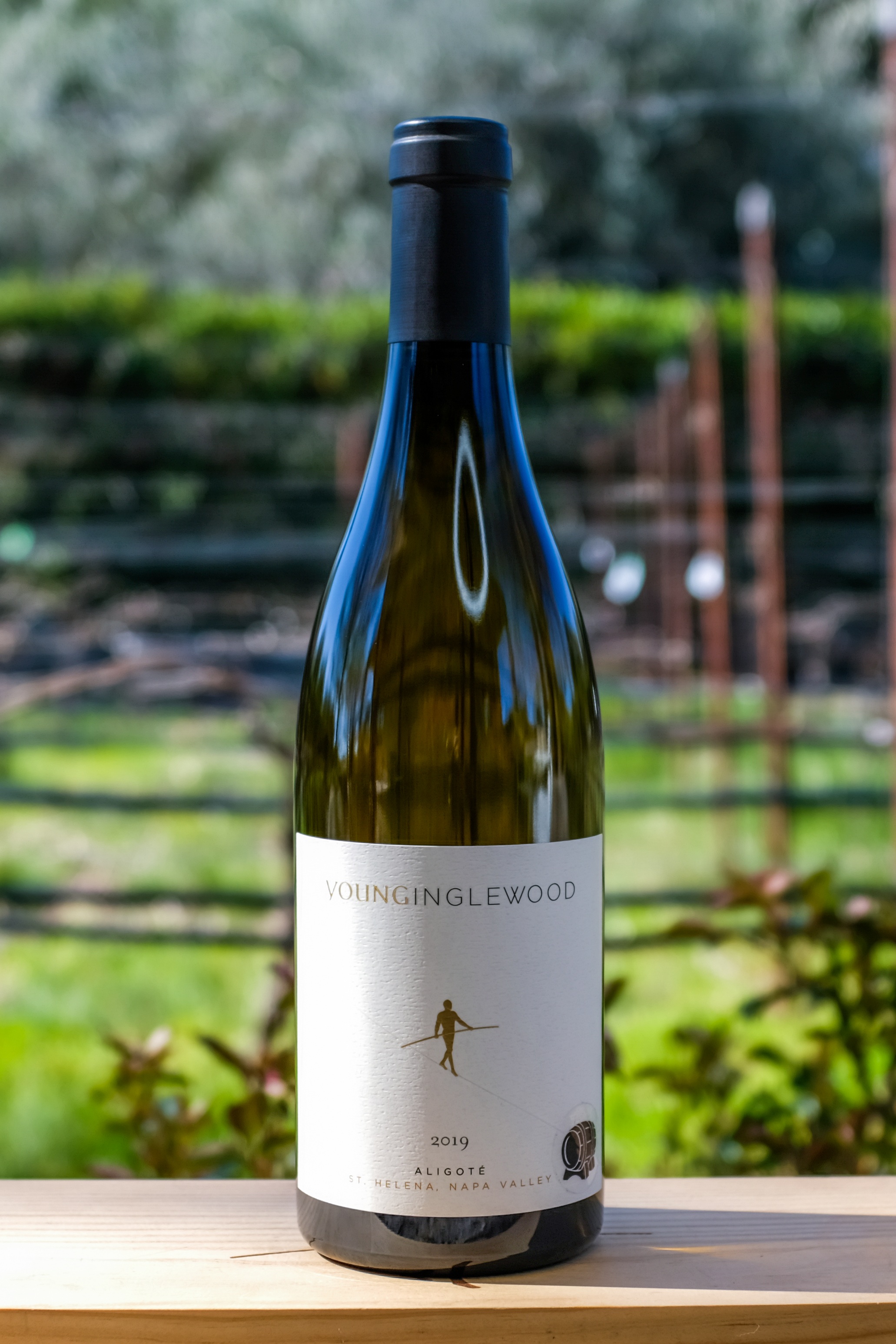
(We used stickers depicting barrels to tell the bottles apart!) We found that we preferred the nuance and complexity introduced by the oak, and we have aged our Aligoté in gently used oak barrels ever since.
What’s the current vintage and how does it taste?
Whenever I drink Young Inglewood Aligoté, no matter what the season, the wine transports me instantly to a mild Spring day, sunny and not too hot, with a gentle breeze. As refreshing as a plunge in a pool on a hot day, it’s lightly perfumed with citrus blossoms and a touch of spice on the finish. Our 2024 Young Inglewood Aligoté is the current vintage. We invite you to try it for yourself!